|
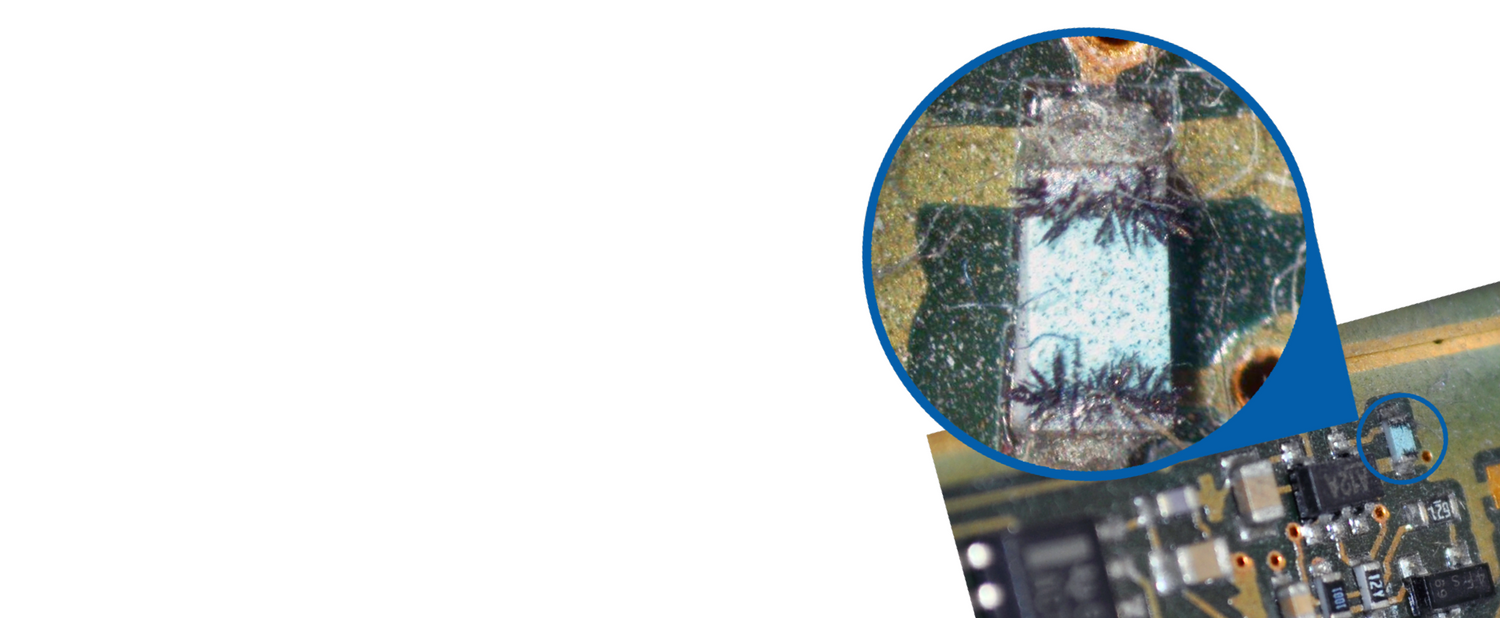
Corrosion of Metals
Corrosion of metals is actually a
chemical reaction caused primarily by attack
of gaseous contaminants and is accelerated
by heat and moisture. Rapid shifts in either
temperature or humidity cause small portions
of circuits to fall below the dew point
temperature, thereby facilitating
condensation. Relative humidity (RH) above
50% accelerates corrosion by forming
conductive solutions on a small scale on
electronic components. Microscopic pools of
condensation then absorb contaminant gases
to become electrolytes where crystal growth
and electroplating occur. Once levels exceed
80% RH, electronic corrosive damage will
occur regardless of the levels of
contamination.
|
Corrosion of Electronic
Equipment
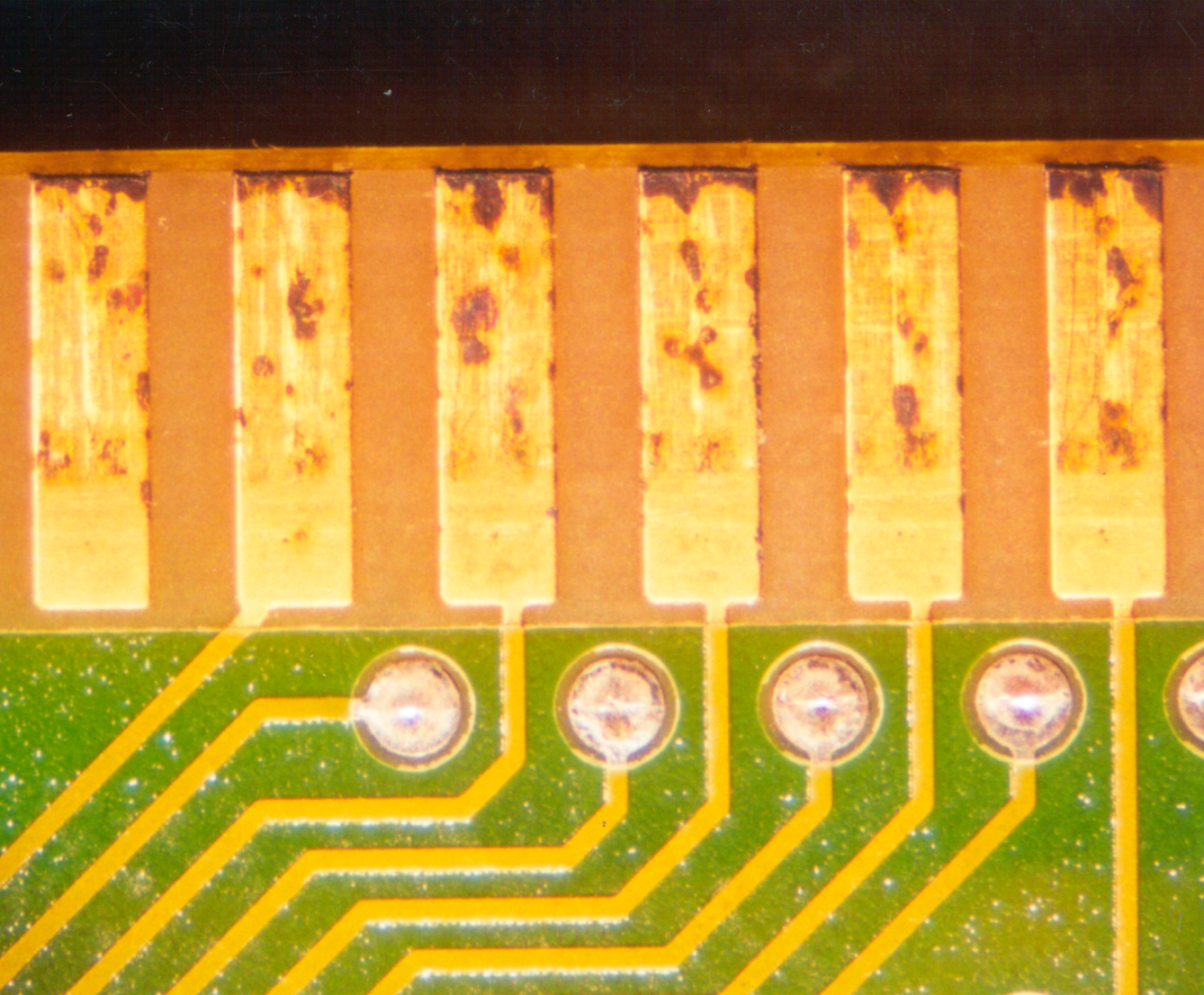
In the context of electronic equipment,
corrosion is defined as the deterioration of
a base metal resulting from a reaction with
its environment. More specifically,
corrosive gases and water vapor exposed to a
base metal result in the buildup of various
chemical reaction by-products. As the
chemical reactions continue, these corrosion
by-products can form insulating layers on
circuits that can lead to thermal failure or
short-circuits with possible pitting and
metal loss.
|
|
Gases that cause corrosion
There are three types of gases that
are the prime culprits in the corrosion
of electronics:
acidic gases, such as hydrogen
sulfide, sulfur and nitrogen oxides,
chlorine, and hydrogen fluoride; caustic
gases, such as ammonia; and oxidizing
gases, such as ozone and nitric acid.
Of the gases that can cause
corrosion, the acidic gases are
typically the most harmful. For
instance, it takes only 10 parts per
billion (ppb) of chlorine to inflict the
same amount of damage as 25,000 ppb of
ammonia.
|
Air Purity Requirements
The different types of
equipment and clean air requirements for
gases are as follows:
-Process computer systems generally require
G1 conditions inside the computer room;
-Microprocessor-based process control or
instrumentation systems generally require G1
conditions inside the electronic equipment
rack room and also inside the control room
if there are significant quantities of
electronics inside the control room;
-Data centers require G1 or G2 conditions
depending on the tightness of the
environmental control specifications
(temperature, humidity);
-Discrete instrument type process control
systems (i.e., with separate controllers,
indicators and recorders) generally require
at least G2 conditions in the control room;
-Motor control centers (MCC) and substations
which contain programmable logic controllers
(PLCs), electronic control systems,
thyristor drives, chopper drives, inverters,
AC phase controllers or uninterruptable
power supplies (UPS) generally require G2
conditions;
MCC and substations that contain only heavy
current switchgear require conditions where
the average concentrations of the gases are:
SO2 - 200 ppb, H2S - 30 ppb, Cl2 and
reactive chlorine compounds - 10 ppb, and HF
- 10 ppb.
|
|
Standards for Air Quality
Standards are in place that provide
specifications for proper control room
design and give detailed information on the
quality of air required for optimal
performance of electronic equipment. In
1985, the International Society of
Automation (ISA) published a standard,
ISA-71.04-1985 "Environmental Conditions for
Process Measurement and Control Systems:
Airborne Contaminants". This document was
followed in 1987 by the International
Electrotechnical Commission (IEC) Standard,
IEC 60654-4 (1987-07) “Operating Conditions
for Industrial-Process Measurement and
Control Equipment. Part 4: Corrosive and
Erosive Influences.” Japan's standard,
JEIDA-29-1990, was revised in 1990 and
published as the Japan Electronic Industry
Development Association’s (JEIDA) "Standard
for Operating Conditions of Industrial
Computer Control System.”
These standards define or characterize
environments in terms of their overall
corrosion potential. By the use of
“reactivity monitoring,” a quantitative
measure of this potential can be
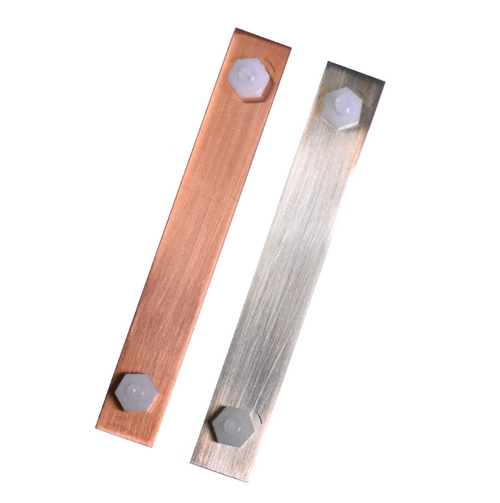
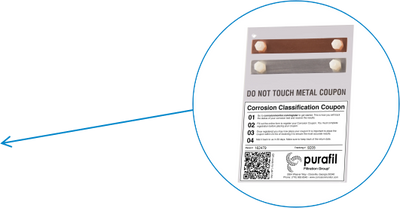
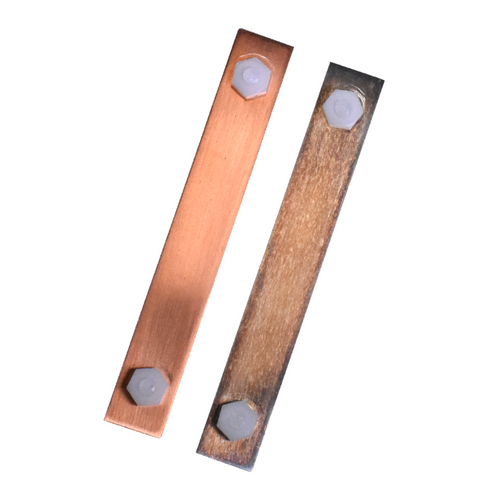
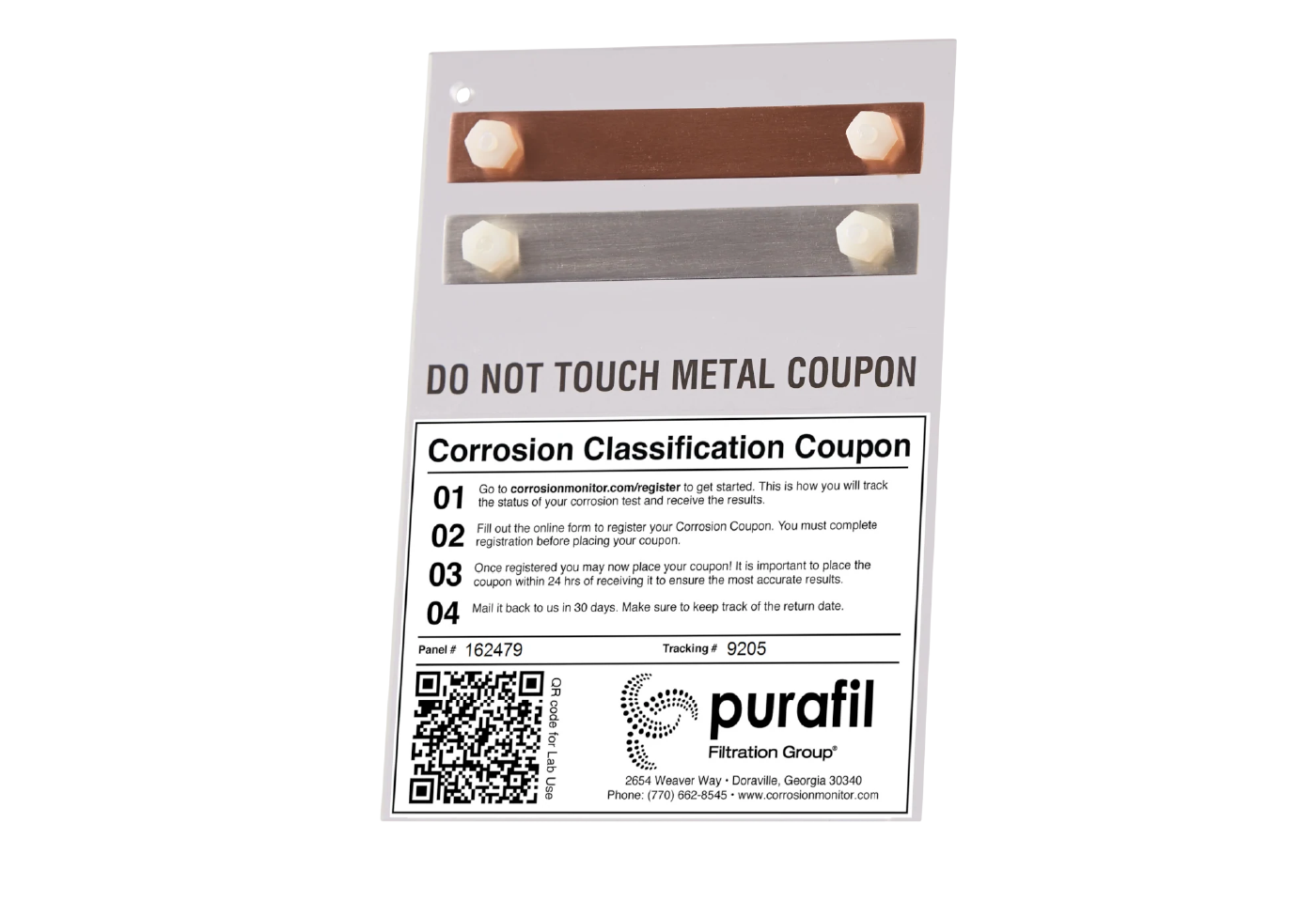
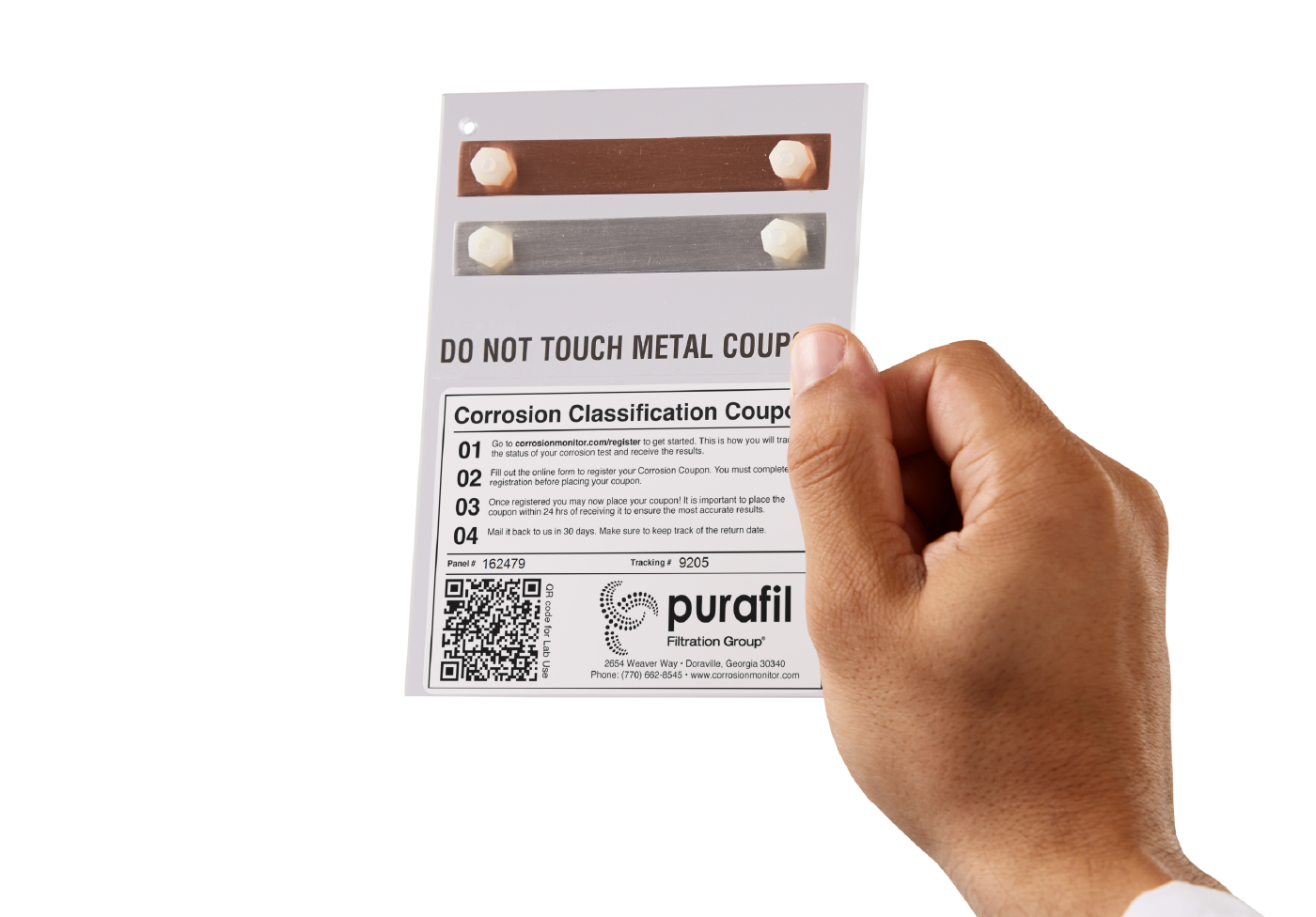
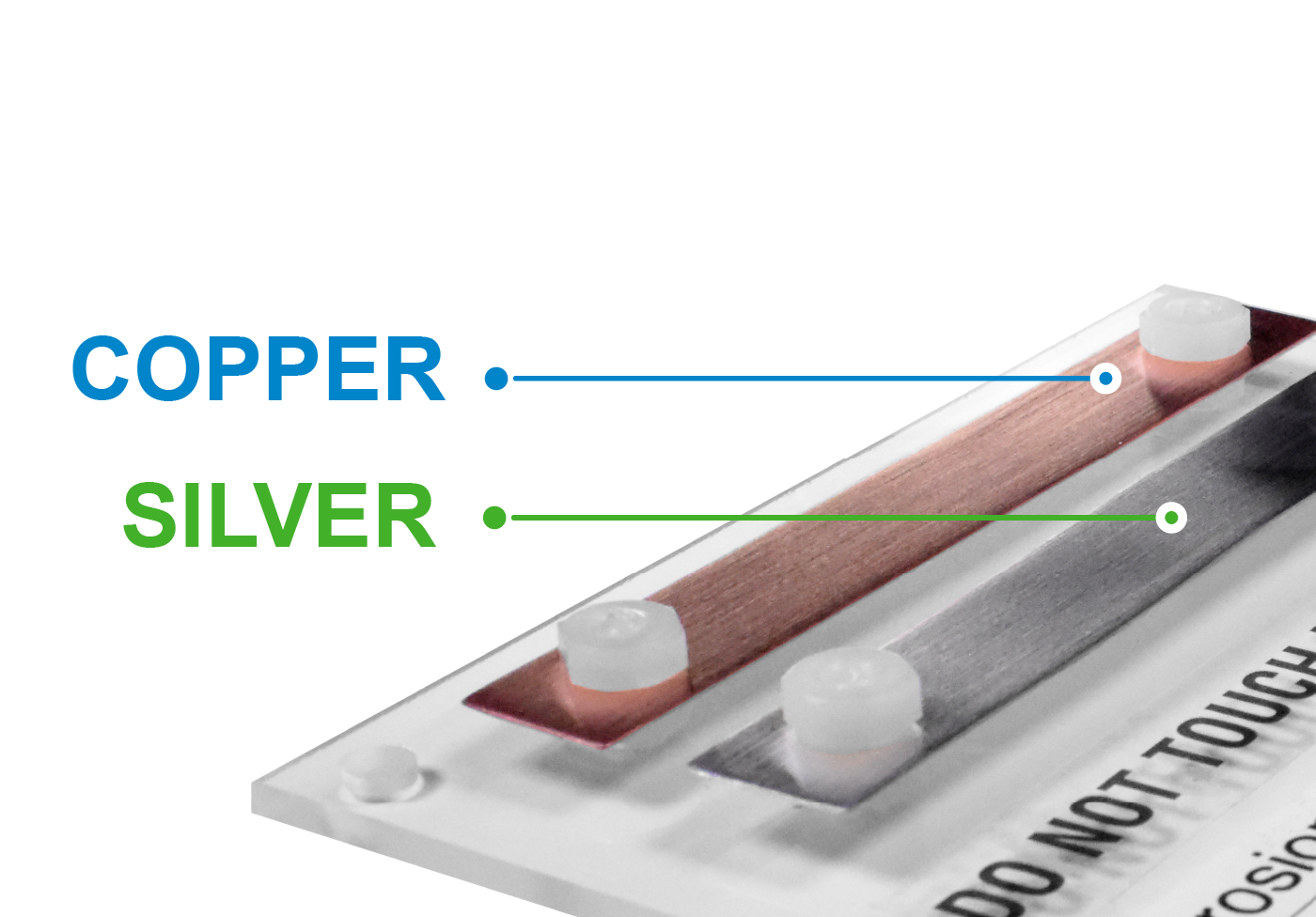
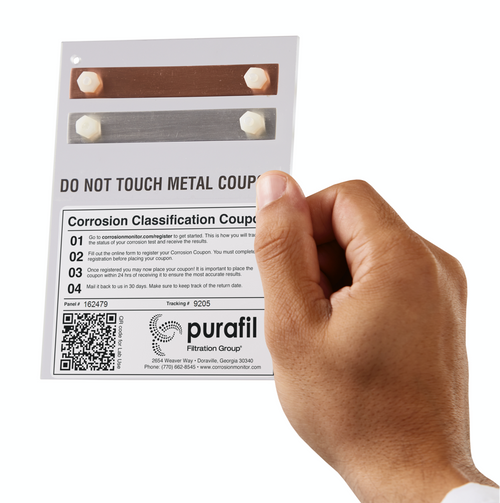
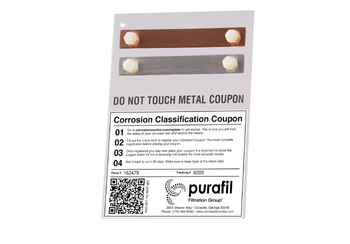
established. Reactivity monitoring involves
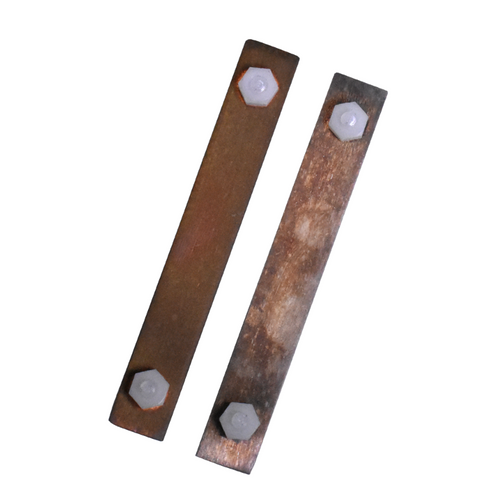
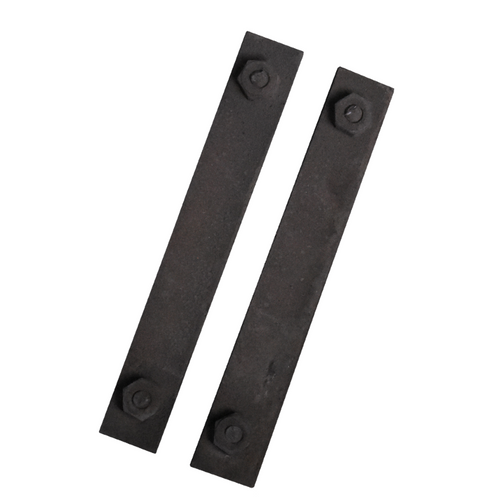
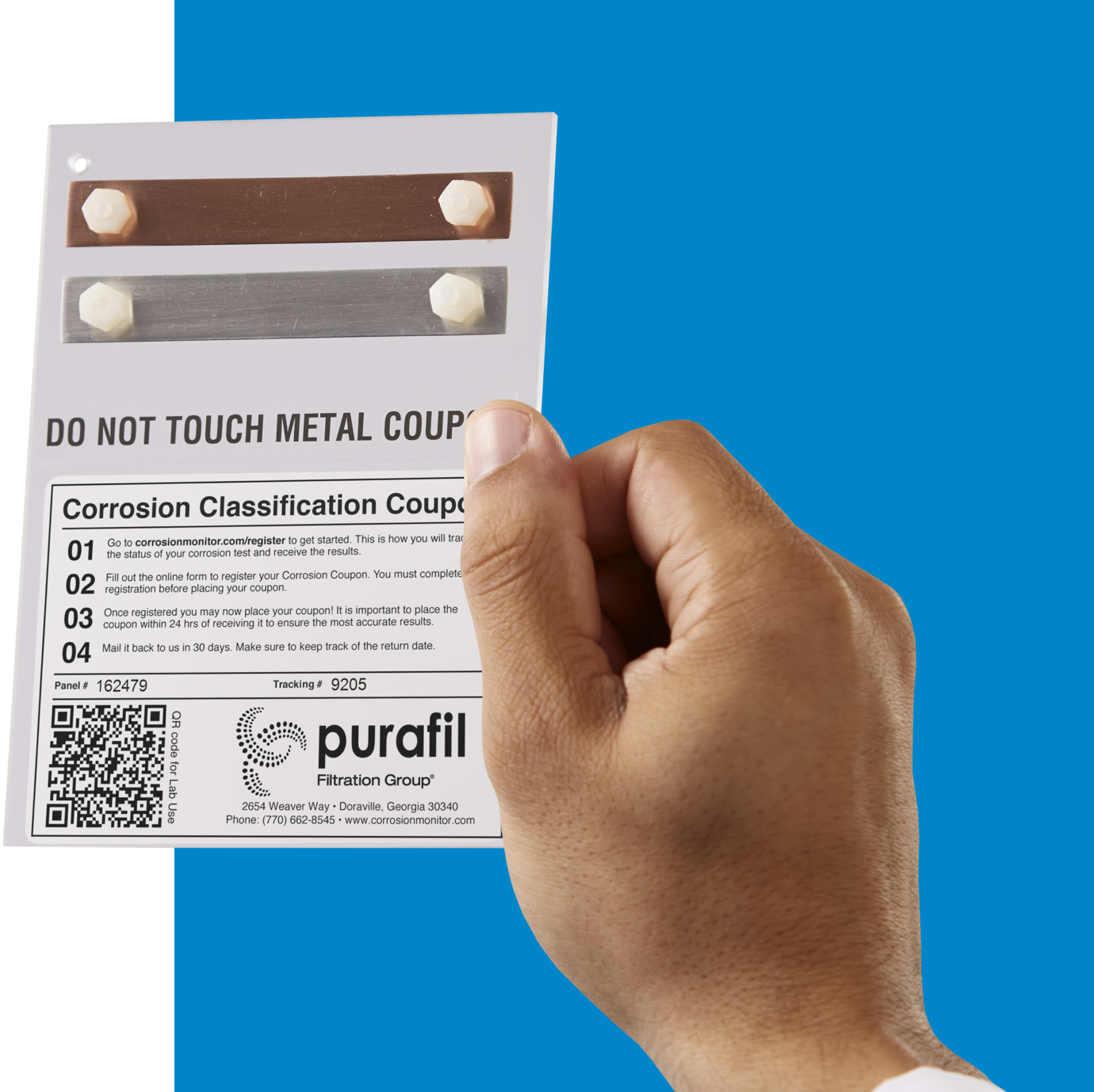
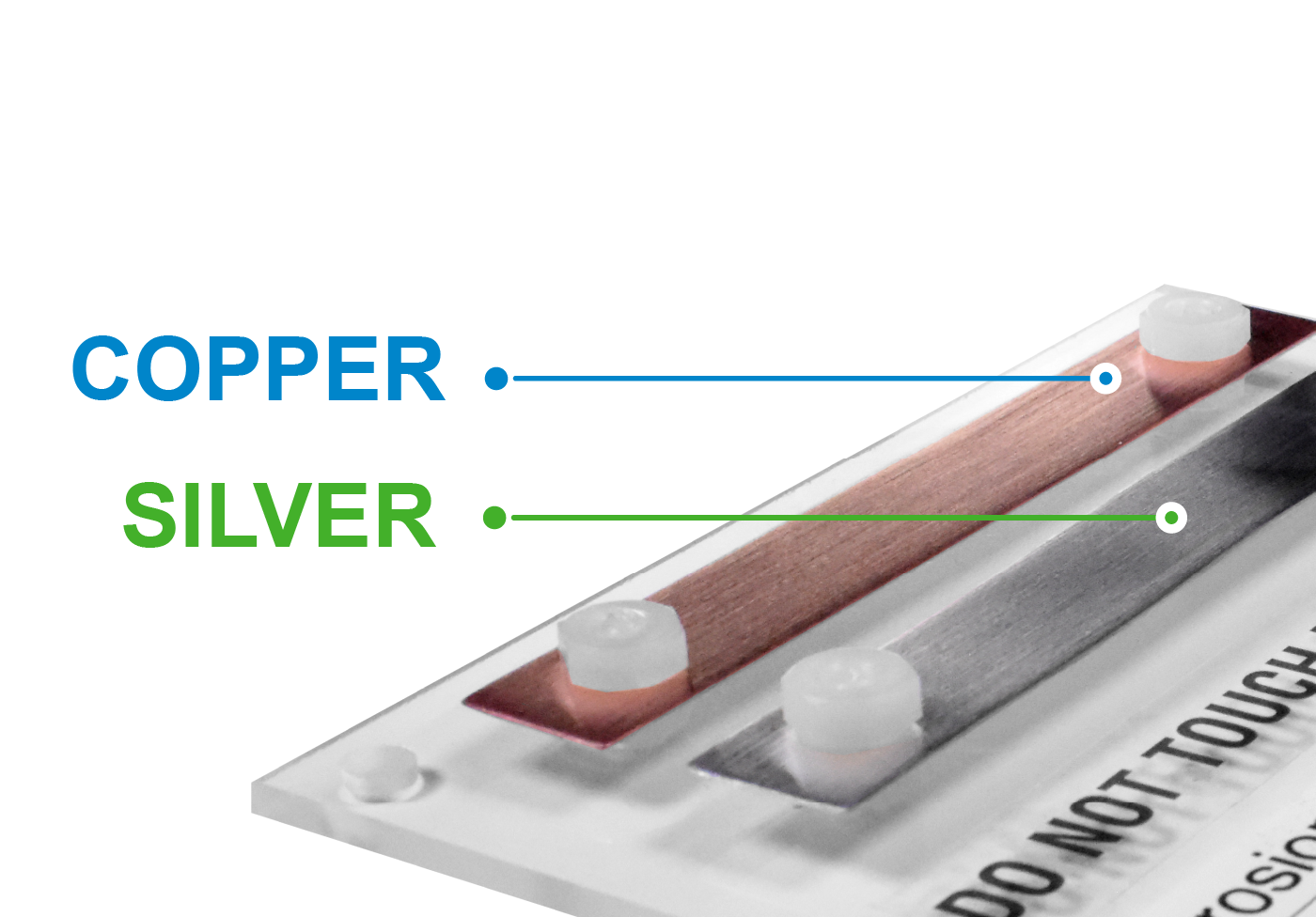
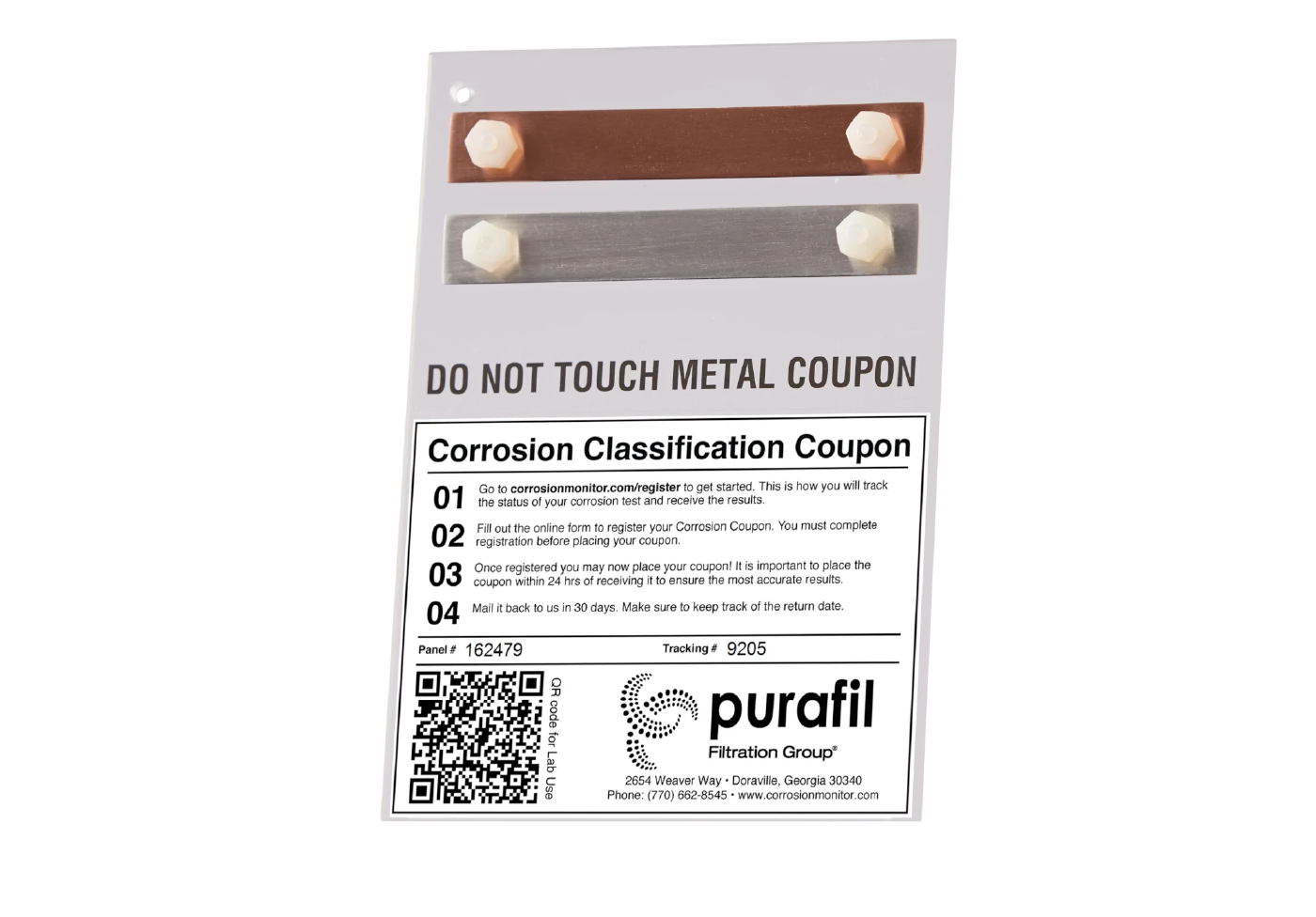
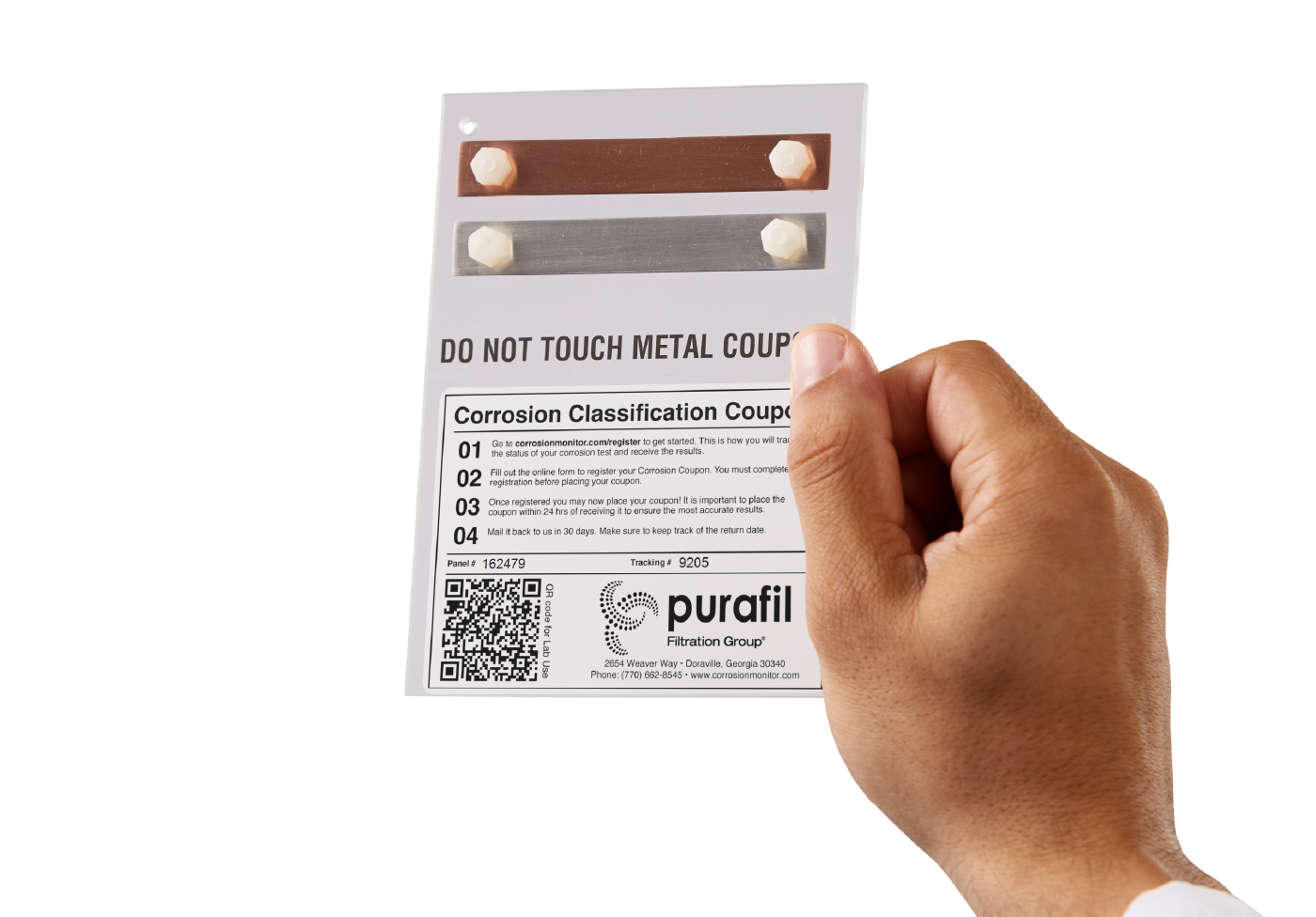
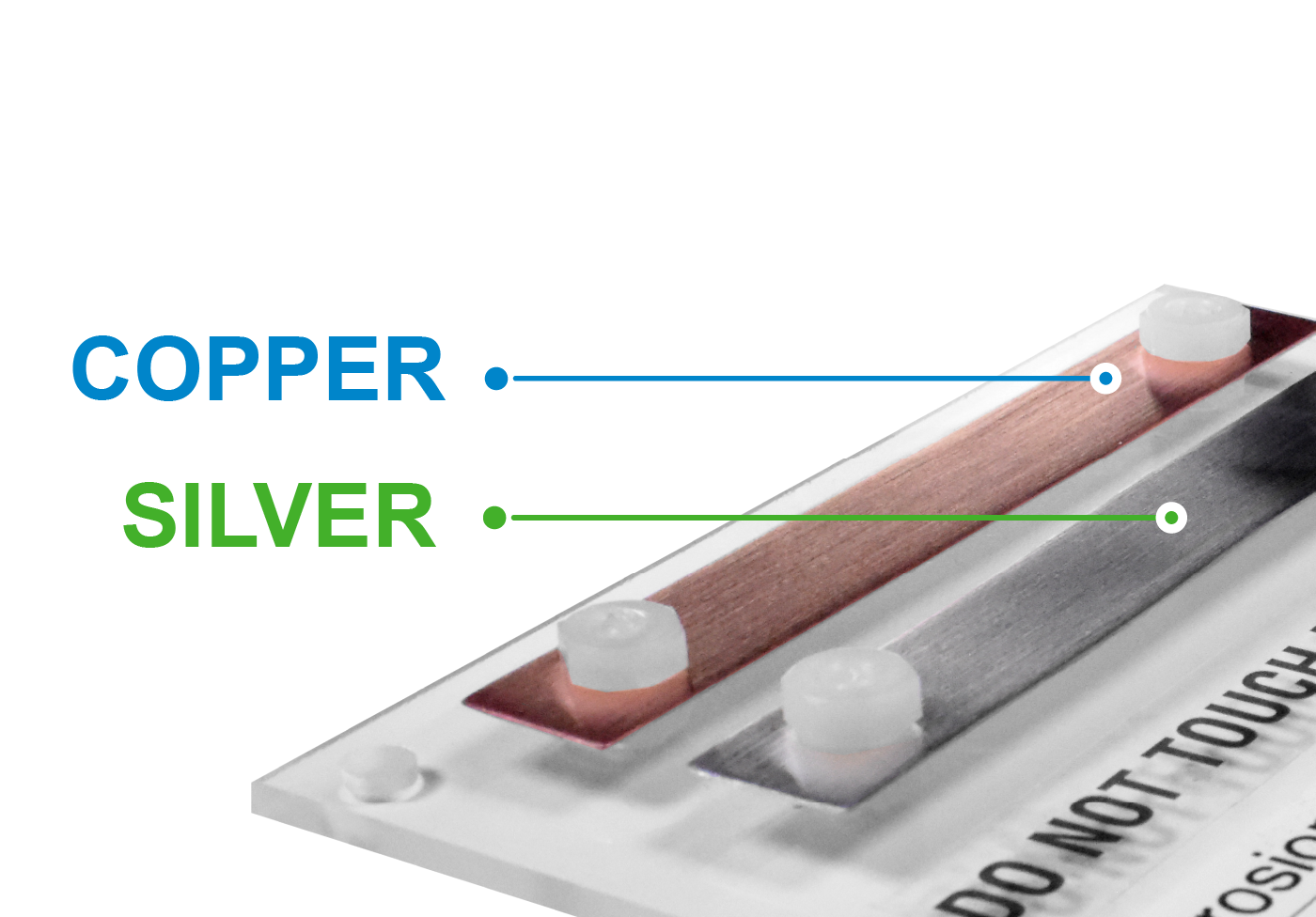
placing strips of specially prepared copper
strips, called Corrosion Classification
Coupons (CCCs, Figure 1), into an
environment. The coupons are left in for a
period of time, and then analyzed in
Purafil’s state-of-the-art laboratory to
determine how much copper corrosion film
formation has occurred. The copper
reactivity is a measurement in angstroms
(ten billionths of a meter) of the thickness
of corrosion film build-up normalized to a
30-day exposure. This analysis technique
allows for the classification of the total
corrosion film thickness, as well as the
film thicknesses attributed to the exposure
of individual corrosive gases.
The synergistic effects of the various
combinations of gases make the determination
of severity levels complex. In addition to
the contaminant gases themselves, the levels
of temperature and humidity also have a
major impact on the corrosion rates.
Therefore, the easiest method of measurement
has been using CCCs according to the methods
prescribed in ISA-S71.04-1985 and in
IEC-654-4-1987. This data is then used to
determine the severity level of the
environment. This severity level in turn
refers to the potential damage that
corrosive gases in the air could cause to
electronics and electrical equipment and,
therefore, provides a method for determining
equipment reliability.
|
Levels of Corrosion
Each site may have different combinations
and concentration levels of corrosive
gaseous contaminants. Performance
degradation can occur rapidly or over many
years, depending on the particular
concentration levels and combinations
present at a site. The following paragraphs
describe how various pollutants contribute
to equipment performance degradation.
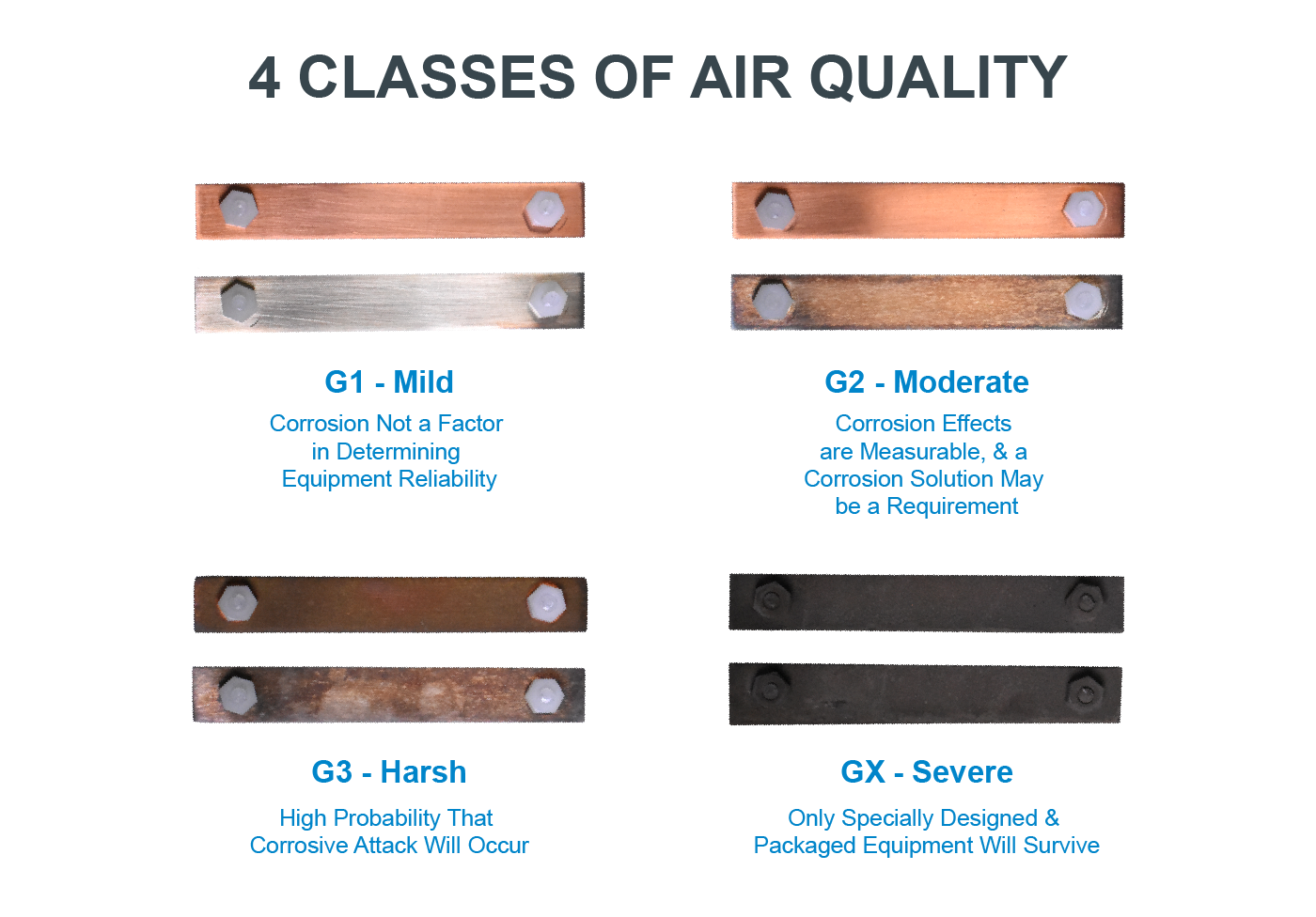
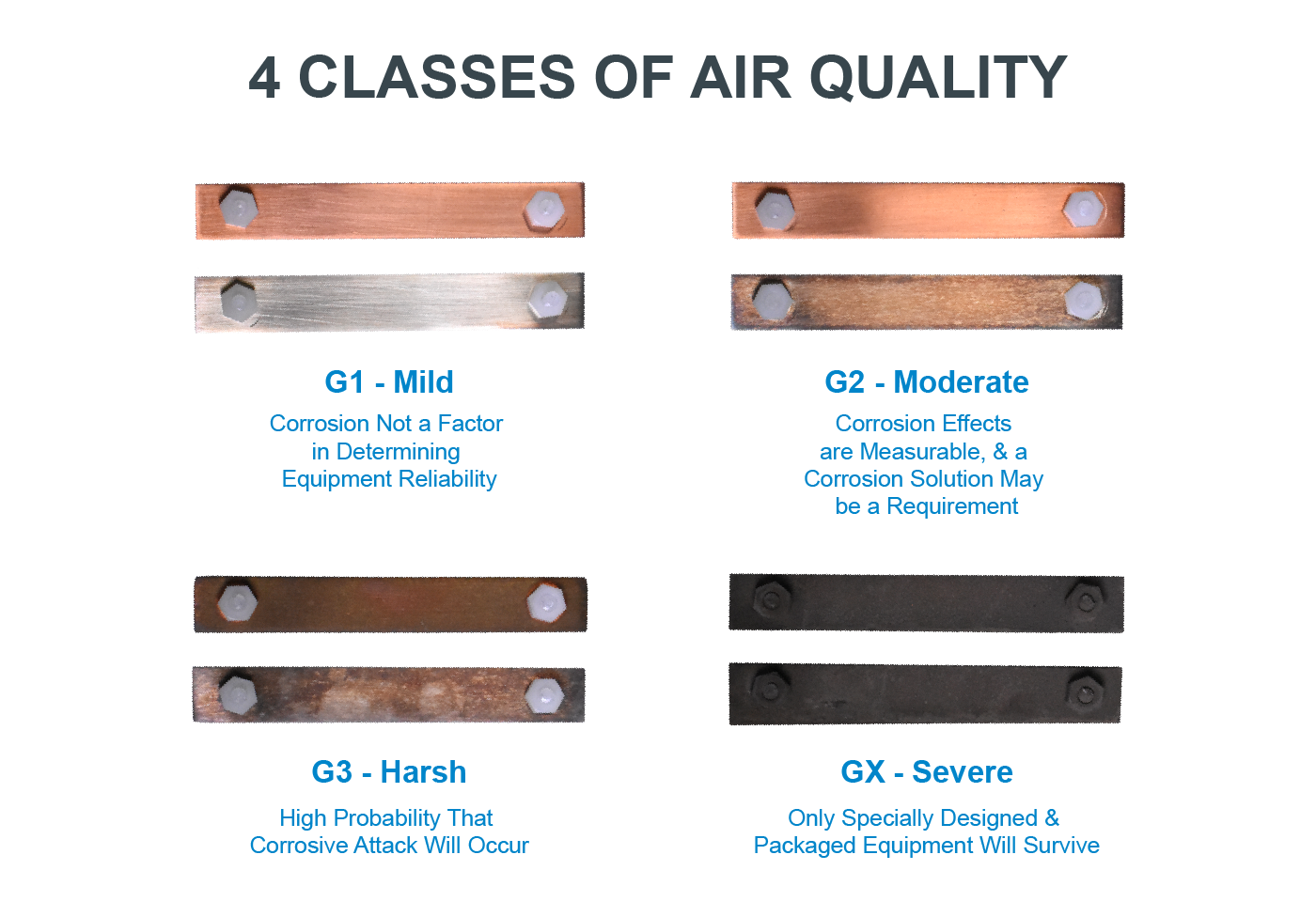
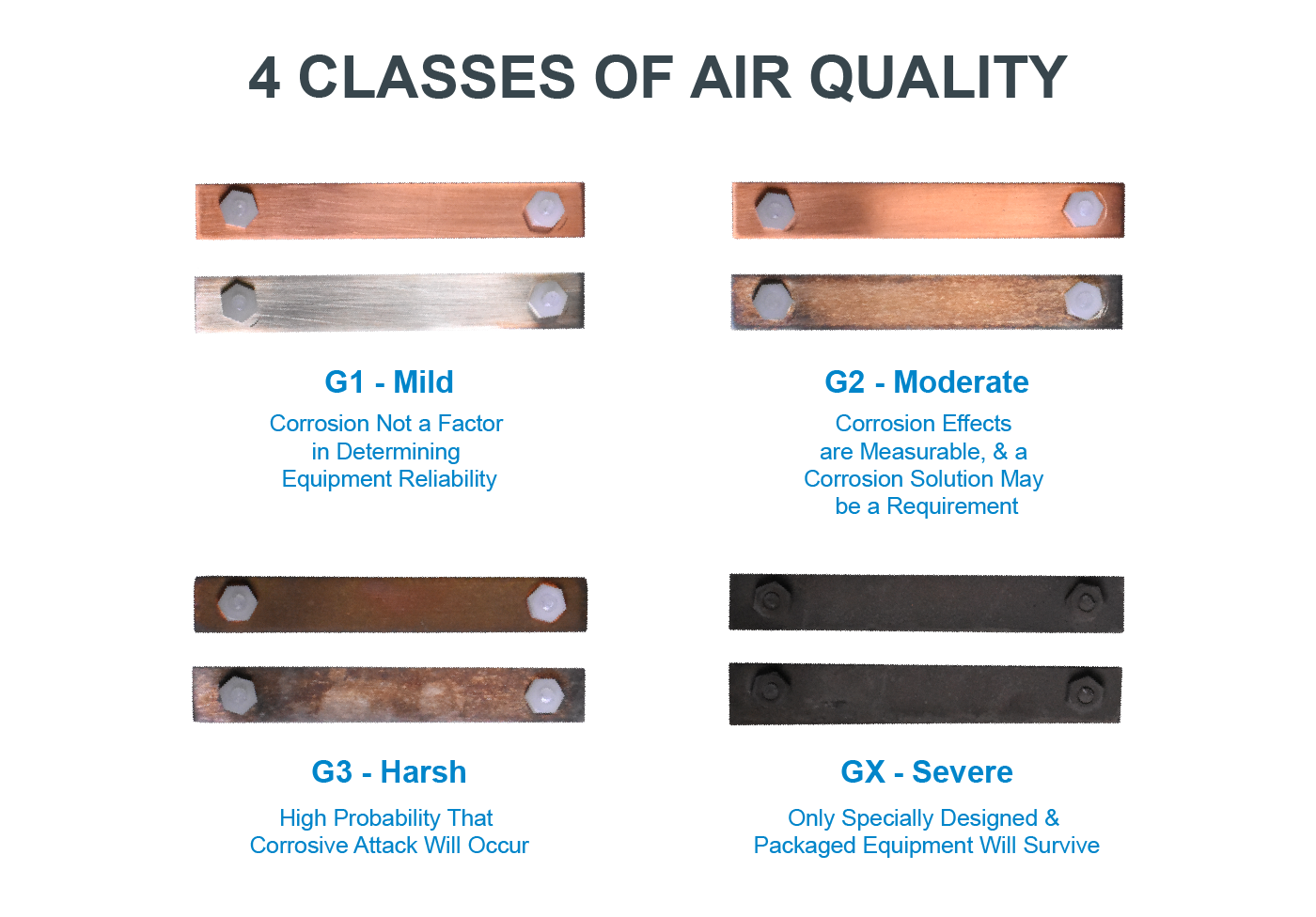
Four levels of corrosion severity have
been established by ISA-71.04. The optimum
severity level is G1 (mild). At this level,
corrosion is not a factor in determining
equipment reliability. As the corrosive
potential of an environment increases, the
severity level will be classified as G2, G3
and GX (the most severe). The effects of
humidity and temperature are also quantified
in this standard. High or variable relative
humidity and elevated temperatures may cause
the acceleration of corrosion by gaseous
contaminants. Relative humidity of less than
50% is specified by the standard.
Class
|
Severity
|
Copper Reactivity
|
Comments
|
| G! |
Mild |
<300Å |
An environment sufficiently
well-controlled such that corrosion is
not a factor in determining equipment
reliability.
|
| G2 |
Moderate |
<1000Å |
An environment in which the effects
of corrosion are measurable and
corrosion may be a factor in determining
equipment reliability.
|
| G3 |
Harsh |
<2000Å |
An environment is which there is a
high probability that corrosive attack
will occur. These harsh levels should
prompt further evaluation resulting in
environmental controls or specially
design and packaged equipment.
|
| GX |
Severe |
>2000Å |
An environment in which only
specially designed and packaged
equipment would be expected to survive.
Specifications for equipment in this
class are a matter of negotiation
between user and supplier.
|
|
For many years, Purafil, Inc. has been
performing corrosion testing as a diagnostic
tool in response to customers' needs and
requests. During this time, more than 50,000
CCCs have been analyzed with more than 50%
showing severity levels greater than those
required for properly installed electronic
equipment.
Purafil is in a unique position to address
these challenges from working with
manufacturers to quantify the corrosive
potential of an environment, to providing
engineered solutions for gaseous contaminant
control, to the ongoing monitoring of the
controlled environment to assure compliance
with standards and specifications. For more
information on Purafil corrosion control
solutions contact us at 1-800-222-6367
(U.S.), 1-770-662-8545 (Canada and
International), or visit
www.purafil.com.
|
References
Atmospheric Corrosion (book), C. Leygraf and
T. Graedel (2000), Wiley-Interscience New
York.
Corrosion Inspection and Monitoring (book),
P.R. Roberge (2007), Wiley-Interscience New
York.
“Humidity and Corrosion” (1987), Purafil,
Inc.
Corrosion Control in Industrial and
Commercial Environments (1995), Design
Manual, Purafil, Inc.
Muller, C.O. “Multiple Contaminant Gas
Effects on Electronic Equipment Corrosion,”
in Proceedings of National Association of
Corrosion Engineers Annual Meeting, April
1990, Las Vegas, NV.
Muller, C. O., “Determination of
Electrical/Electronic Equipment Reliability
in Pulp and Paper Mills,” in Proceedings of
Canadian Pulp & Paper Association 77th
Annual Meeting, January 1991, Montreal,
Canada.
Muller, C.O., (1991), Multiple Contaminant
Gas Effects on Electronic Equipment
Corrosion, Corrosion Journal 47(22):146-151.
Muller, C.O., Affolder, C.A., and England,
W.G. “Multiple Contaminant Gas Effects on
Electronic Equipment Corrosion: Further
Studies,” in Proceedings of Advancements in
Instrumentation and Control, Instrument
Society of America, October 1991, Anaheim,
CA.
Muller, C., and Weiller, A., “Electronic
Monitoring of Indoor Atmospheric
Pollutants,” in Proceedings of Healthy
Buildings ‘94 Conference & Exposition, NCIAQ,
May 1994, Tampa, FL.
Muller, C.O., England, W.G., and McShane,
W.J., “Developments in Measurement and
Control of Corrosive Gases to Avoid
Electrical Equipment Failure,” in
Proceedings of PITA Annual Technical
Conference, September 14-16, 1999,
Manchester, England.
Zakipour, S. and Leygraf, C., Quartz crystal
microbalance applied to studies of
atmospheric corrosion of metals, British
Corrosion Journal, Vol. 27, No. 4, pp.
295-298.
|